
Blogs /
Marketing Strategy
As travel demand evolves, hotel marketing is no longer just about visibility—it’s about being discovered where booking decisions are made. This report explores how search, social, and AI are reshaping guest acquisition.
By Shahar Rubin, Co-founder

My advice: start with clean booking data, set rate limits, and test AI pricing in a 60–90-day pilot before automating changes. AI can help hotels respond to demand shifts, but I’d keep revenue managers in charge of pricing rules and disruptions.
Here’s what I’d focus on:
Better forecasts: Connect hotel systems and check booking data for errors.
Faster rate updates: Automate routine changes within set limits; send uncertain decisions to managers.
Guest response: Watch conversion, price sensitivity, and consistency across booking channels.
Revenue results: Track ADR, occupancy, RevPAR, and TRevPAR - not just rooms sold. Include campaign costs when measuring direct-booking returns.
My test is simple: <u>does revenue improve while manual pricing work drops?</u> I’d expand only when the pilot shows both - not just hours saved.
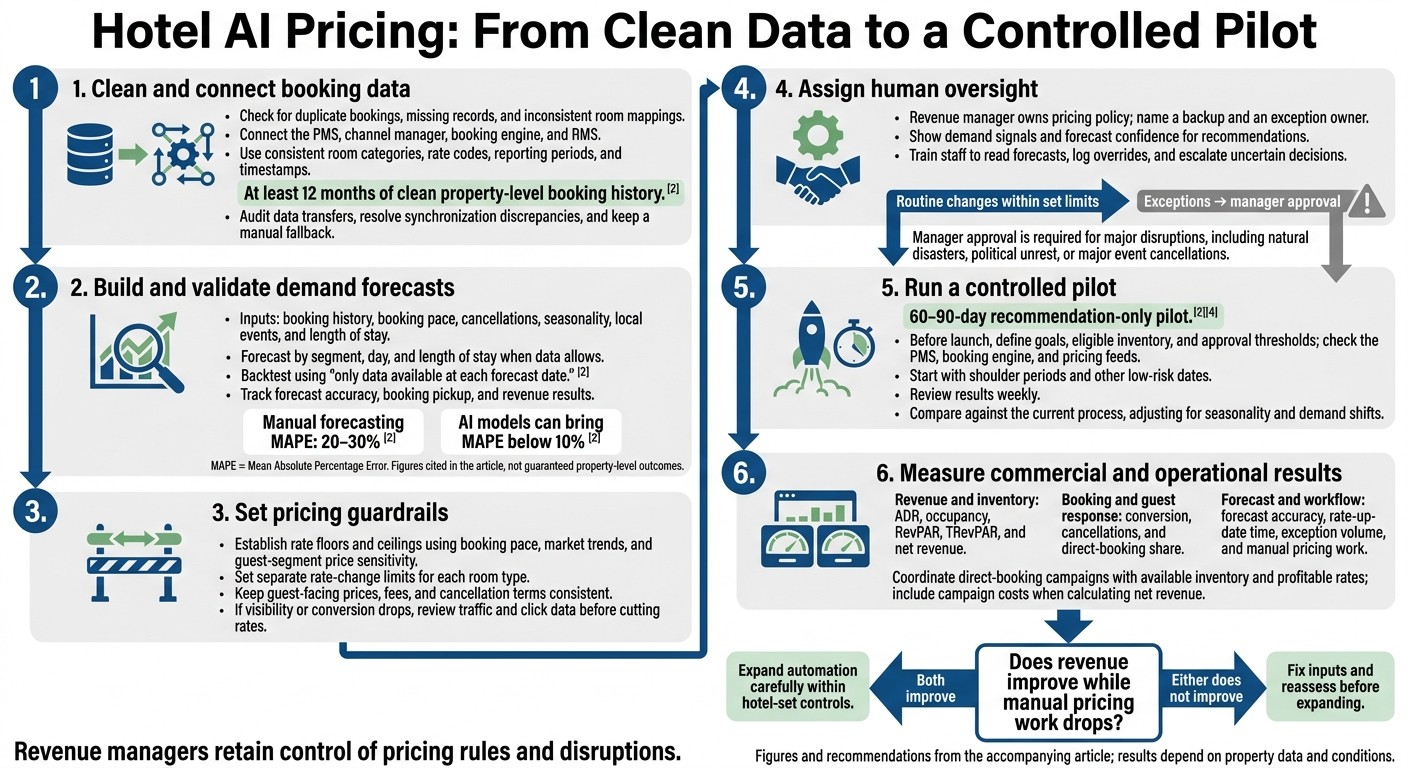
Hotel AI Pricing: From Clean Data to a Controlled Pilot
The Evolution of Hotel Revenue Management and Pricing Strategies | with Chris Anderson
Demand Forecasting and Data Quality
A missed demand spike can mean selling rooms too cheaply. An inflated forecast can leave rooms empty or force last-minute discounts. When reservation data is scattered across PMSs, booking engines, and spreadsheets, revenue managers may rely on outdated signals. Better forecasts start with cleaner, current data.
Use AI to Improve Demand Forecasts
Machine learning can improve demand forecasts using booking history, booking pace, cancellations, seasonality, local events, and length of stay. It can also spot demand on the days surrounding peak events. When the data allows, forecast by segment, day, and length of stay rather than applying one broad pattern.
Track forecast accuracy, booking pickup, and revenue results. Manual forecasting often has a Mean Absolute Percentage Error (MAPE) of 20–30%; AI models can bring it below 10%. Keep human review in place for disruptions that historical patterns can't explain.
These forecasts depend on keeping the underlying data current.
Clean Data and Connect Hotel Systems
Before automating pricing, check for duplicate bookings, missing records, and inconsistent room mappings. Connect the PMS, channel manager, booking engine, and RMS so forecasts reflect current reservations and inventory. Aim for at least 12 months of clean property-level booking history to account for seasonal patterns.
Use consistent room categories, rate codes, reporting periods, and timestamps across connected systems. Watch for synchronization failures and resolve discrepancies before they affect rates or availability. Bad source data leads to bad pricing: duplicate bookings inflate demand, while mismatched room categories distort inventory and rates.
Once forecasts and data are aligned, the next bottleneck is how fast rates can change.
Rate Update Delays and Guest Price Sensitivity
Slow rate updates can miss shifts in demand and lead to avoidable discounts. But sudden price increases can hurt conversion and guest trust.
Set Approval Rules for Faster Rate Updates
Let AI make AI dynamic pricing tips for routine rate changes and route exceptions to managers. Start with shoulder periods and other low-risk dates.
Require manager approval for major disruptions such as natural disasters, political unrest, or major event cancellations.
Set Rate Limits Based on Price Sensitivity
Use booking pace, market trends, and each guest segment’s response to price changes to set rate floors and ceilings. Set separate limits on rate changes for each room type. If visibility or conversion drops, review traffic and click data before cutting rates.
Keep guest-facing prices, fees, and cancellation terms consistent. Assign one person to handle exceptions and review unusual recommendations so these controls work as intended.
Adopt AI Pricing With Human Oversight
Assign Pricing Roles and Risk Controls
With rate limits in place, move from rules to a controlled pilot. Put the revenue manager in charge and name a backup to monitor forecasts and overrides. Each recommendation should show demand signals and forecast confidence. The hotel sets pricing policy and retains final approval for exceptions.
Train both people to read forecasts, log overrides, and escalate uncertain decisions. Apply these controls during the pilot:
Risk | Practical control |
|---|---|
Data problems | Clean booking data before forecasting. |
Integration failures | Audit data transfers and keep a manual fallback. |
Unclear recommendations | Require demand signals and forecast confidence. |
Excessive automation | Keep hotel-set approval thresholds and human review. |
Run a Pricing Pilot and Measure Results
Check the PMS, booking engine, and pricing feeds. Then backtest using only data available at each forecast date. Before starting a 60–90-day recommendation-only pilot, set goals, eligible inventory, and approval thresholds.
Compare pilot results with the current process, adjusting for seasonality and demand shifts. Track ADR, occupancy, RevPAR, TRevPAR, conversion, cancellations, forecast accuracy, direct-booking strategies, and net revenue. Review results weekly before expanding automation.
Match Direct-Booking Campaigns to Inventory
Once the pilot is running, match marketing spend to the rooms and rates the model can still sell profitably.
Have pricing and marketing teams agree on inventory and rates before launching Sail’s managed Facebook, Instagram, and metasearch campaigns. These campaigns drive direct bookings without upfront ad spend. Include campaign costs when calculating net revenue.
Conclusion: Start With Reliable Data and a Small Pilot
AI forecasting reduces demand uncertainty, but reliable recommendations depend on clean, connected data and rate limits. Start with a small pilot.
Expand only when revenue improves and manual rate work drops. Track rate-update time, forecast accuracy, and exception volume - not just hours saved. If those measures improve, expand carefully. If they don’t, fix the inputs first. Keep the revenue manager in charge of events that historical data can’t explain, such as renovations or natural disasters.
FAQs
Can my hotel use AI pricing with limited booking history?
Yes. AI pricing uses both booking history and real-time signals, such as competitor rates, local events, weather forecasts, and flight schedules. It combines these signals with data from your property management system to gauge demand and recommend rates.
Many hotels begin in recommendation-only mode to build confidence before letting AI adjust rates automatically within set price limits.
How can I tell if AI pricing caused revenue gains?
Run a controlled A/B test to separate AI pricing’s impact from other market factors. Apply AI recommendations to selected properties or date ranges, then compare their results with a control group.
Track RevPAR growth, ADR lift, and forecast accuracy, typically measured by Mean Absolute Percentage Error (MAPE). Also monitor your Market Penetration Index (MPI): a score above 100 means you’re outperforming the market.
How can I keep dynamic pricing fair for guests?
Keep pricing transparent and consistent. Set rates based on real-time market demand, and let data - not emotional reactions - guide decisions. This helps guests understand why prices are reasonable and reduces the risk of appearing to price gouge.
AI can’t account for every ethical or social concern. Keep people involved to ensure pricing stays transparent and follows brand guidelines. Audit data regularly and communicate clearly with guests to build trust.
Related Blog Posts
Share:
20 years of hospitality lessons. No fluff. No spam
Join 500+ hospitality pros getting our best growth playbooks.

hi@sailtech.ai
RESOURCES
Products
Free Tools
© 2026 Sail. All rights reserved.